
Migration tooling
Profile, normalize, rehearse, import, and reconcile source data through the same business APIs used by Abbey.
Production capabilities for the work between a customer PO and the financial statements—supported by governed AI, not replaced by promises.
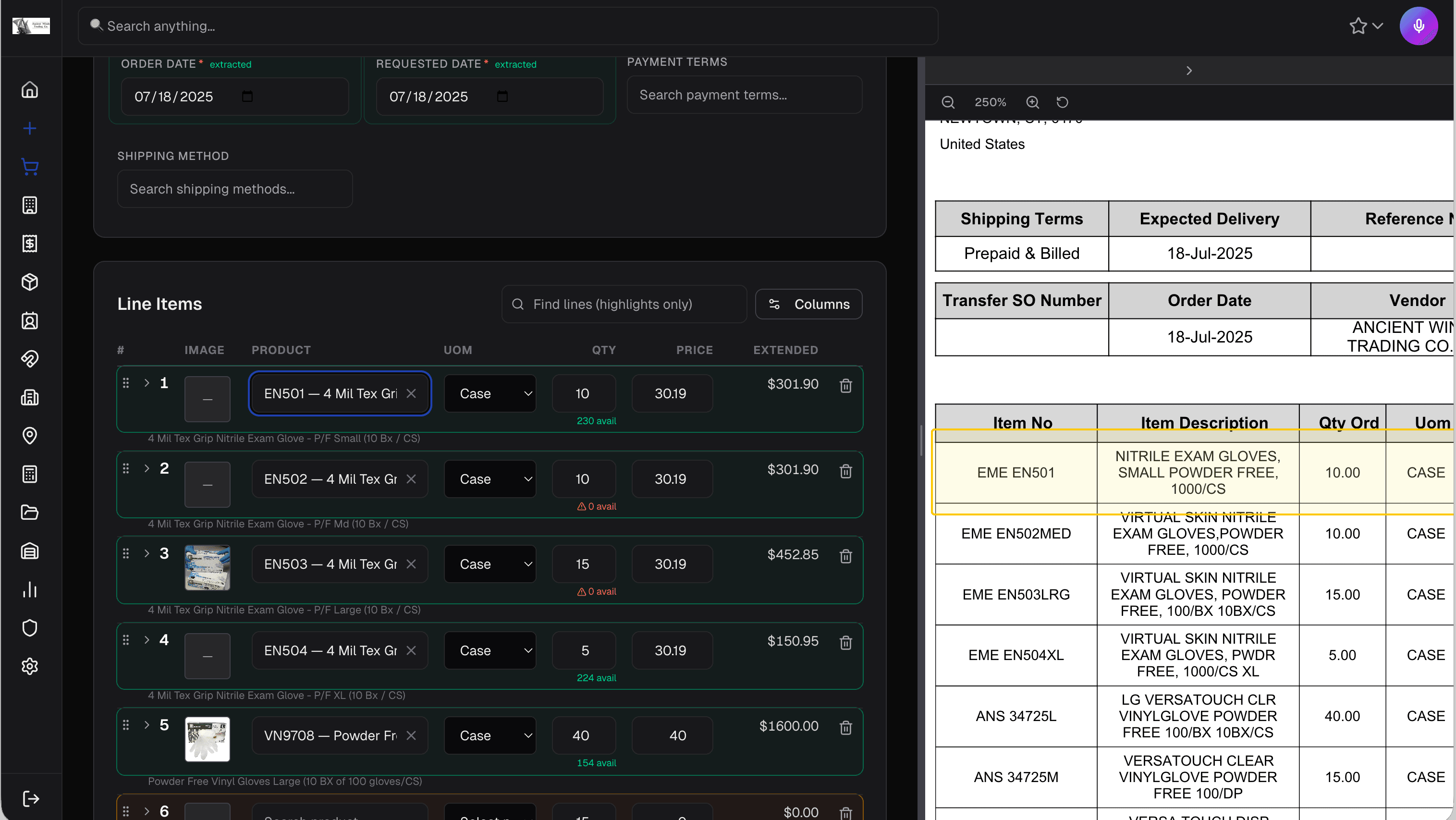
Extract customer PO data, verify it beside the source document, apply contract pricing, check inventory, and route exceptions for review.
Build a focused purchasing queue from demand, commitments, order points, vendor lead times, pack sizes, minimums, and existing supply.
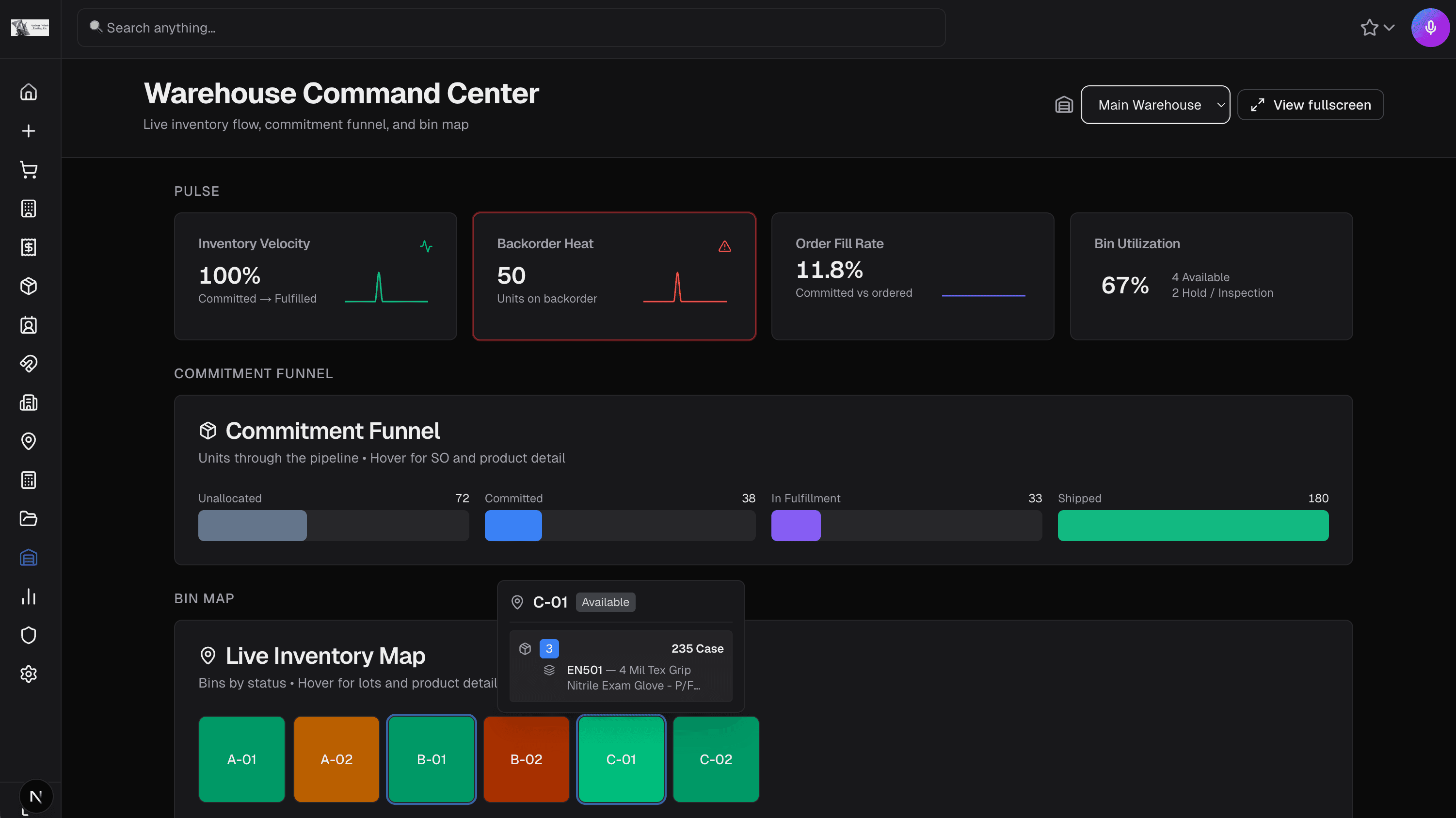
Run scanner-ready receiving, putaway, picking, packing, dispatch, driver routes, signatures, returns, and proof of delivery.
Give customers access to orders, invoices, statements, and account information while your team manages AI-assisted cases and support email in context.
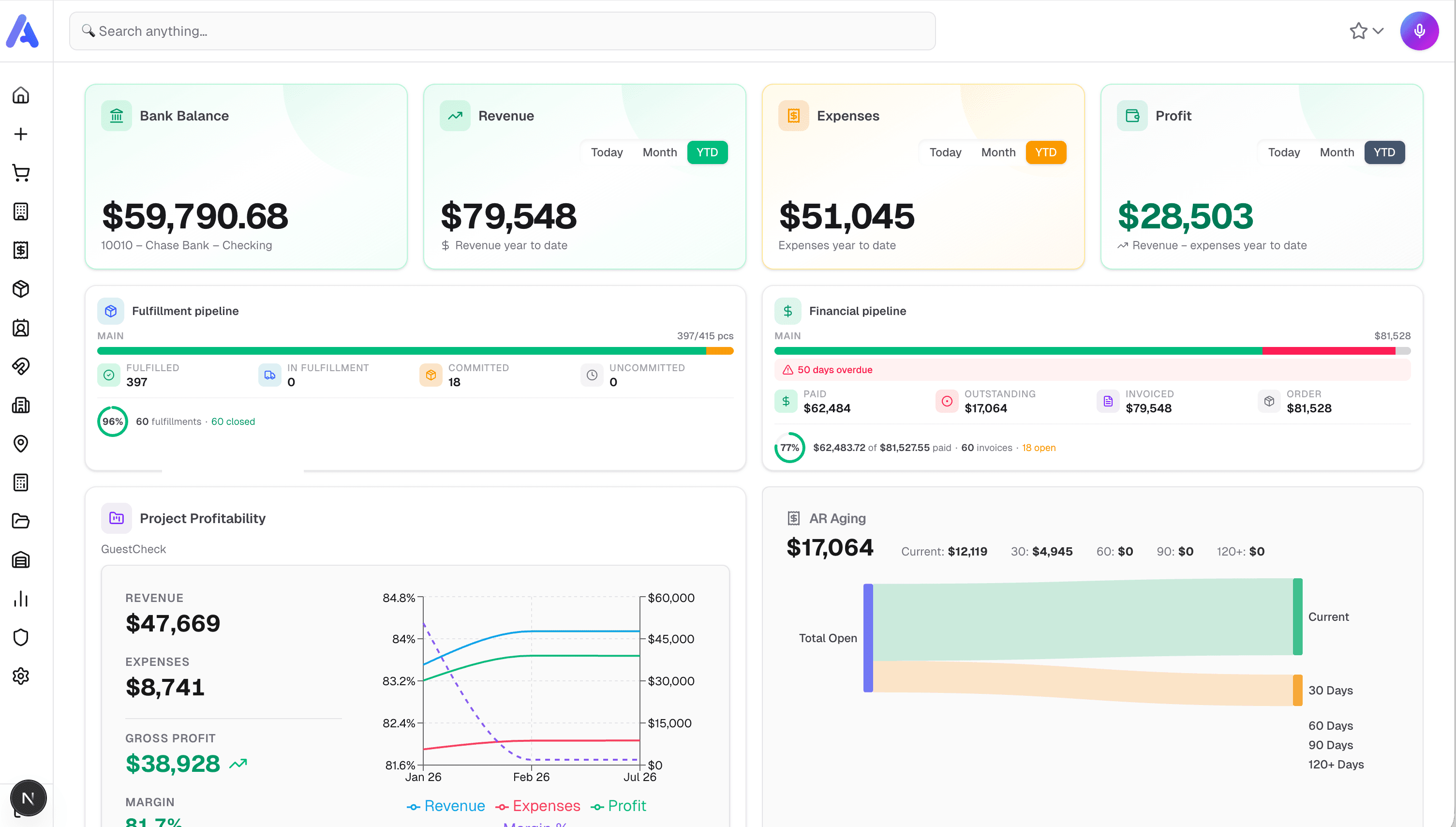
Connect AR, AP, cash application, bank reconciliation, journals, inventory accounting, and real-time financial reports to the transactions that created them.
Ask operational questions by voice or text, produce ad-hoc AI reports, and securely connect approved agents to Abbey through MCP.
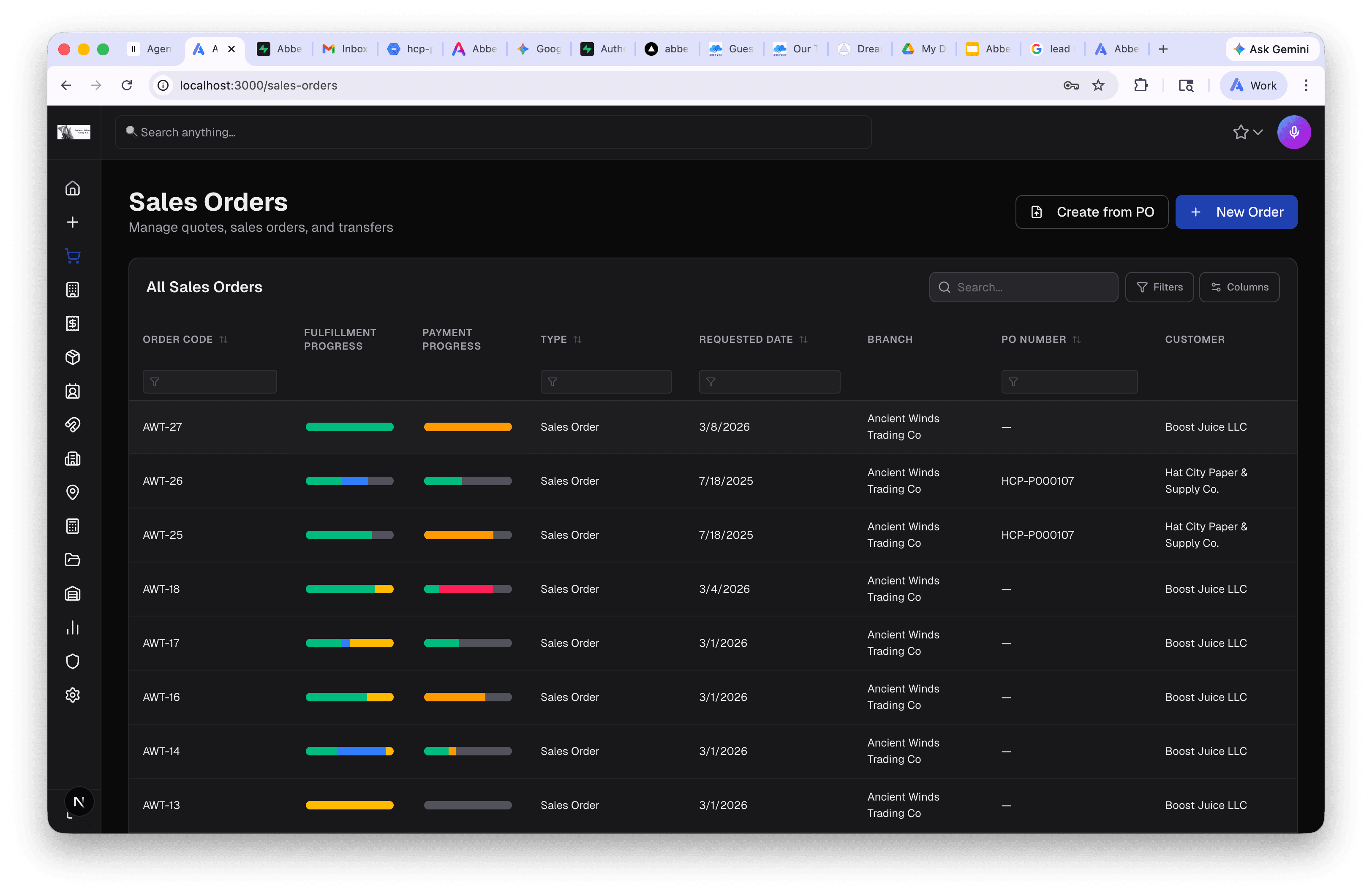
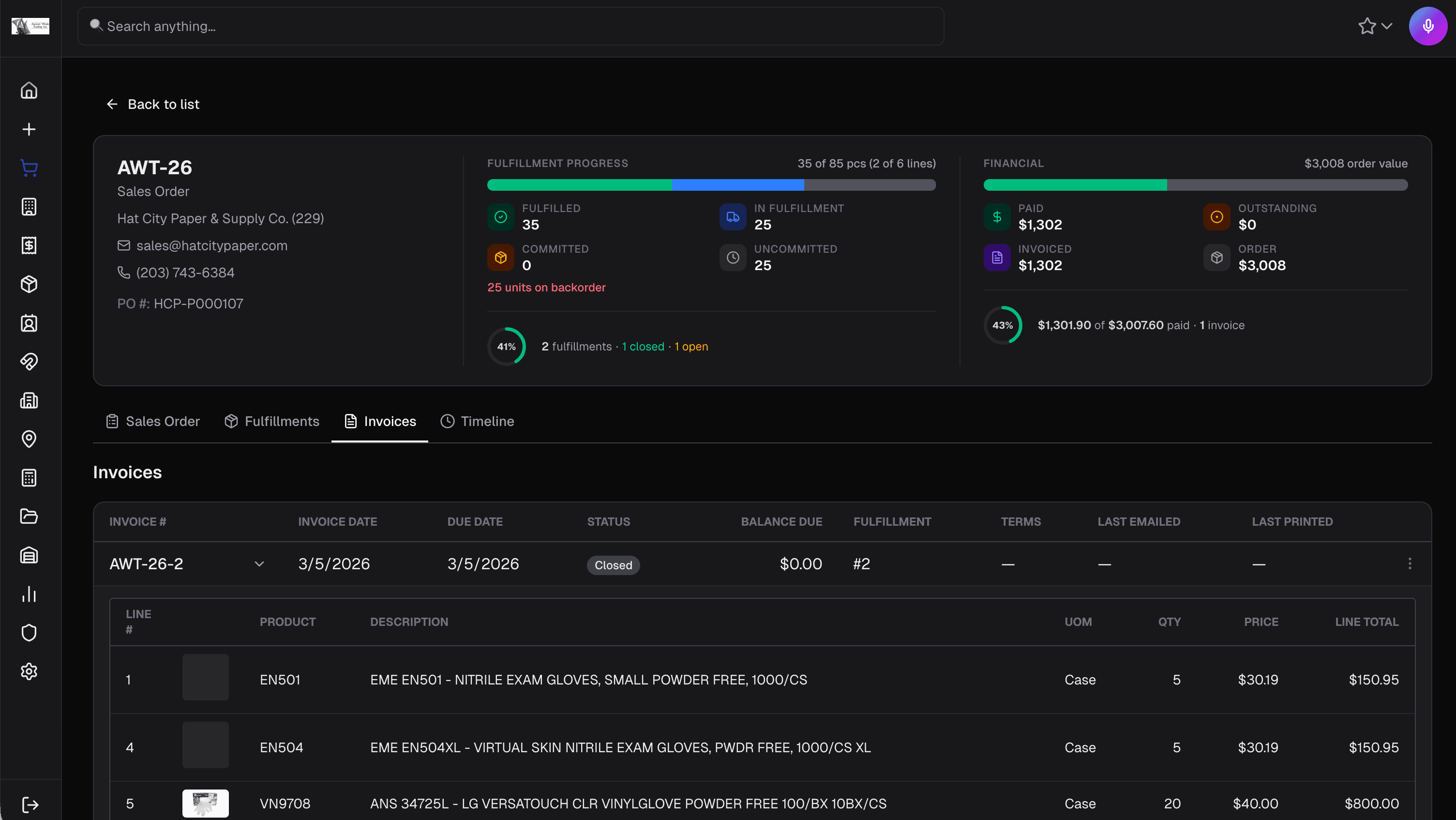
Current product screens across finance, warehouse, order processing, and the order lifecycle.
Value for wholesalers:
Value for wholesalers:
Value for wholesalers:
Value for wholesalers:
Value for wholesalers:
The operational foundation distributors need to configure the system around their business and grow without brittle workarounds.
Profile, normalize, rehearse, import, and reconcile source data through the same business APIs used by Abbey.
Resolve customer, contract, quantity, branch, and product pricing with traceable precedence and effective dates.
Define plans, calculate earnings from eligible transactions, review results, and carry approved amounts into payout workflows.
Trigger governed actions from business events with conditions, approvals, retries, and an inspectable execution history.
Route AI through centralized policy, permissions, audit logging, provider controls, and tenant-safe data boundaries.
Abbey's API-first architecture makes the ERP usable by people, automations, and approved agents. The AI Trust Layer keeps model access, permissions, tenant boundaries, provider routing, and audit history in one controlled path.